Eyelid Growth Removal: Chalazia, Papilloma, Cysts
Chalazion is a chronic proliferative inflammation of the edge of the eyelid around the Meibomian gland and the ciliary cartilage. The condition occurs when the gland is blocked and the secretion fluid accumulates inside.
If a chalazion is very large, causes discomfort or is constantly recurrent, a surgical removal may be needed. It is performed by making an incision and curettage. A local anaesthetic is used to fully block pain sensitivity in the area of the eye. The surgery takes about 20 minutes. After the procedure, you will be prescribed an anti-bacterial eye ointment. The eyelid may get swollen, some bruising may occur during the first week after the operation, which then completely fades away without leaving any traces.
If a chalazion recurs despite the treatment, you need to visit your therapist. Sometimes a chalazion may be caused by certain pathologies, such as skin diseases.
Benign eyelid growths include papilloma, atheroma, cysts, xanthelasma.
One should treat the growths using caution and personalized approach. In every specific case, only the doctor makes the decision regarding growth removal. In case there is the slightest suspicion of the malignant pathological process, a histological analysis should be performed.
The most modern and effective method is the removal of the growth using the high-frequency electric surgical scalpel. The surgery is performed under local anaesthesia and is painless. In case of a larger surgery, cosmetic stitches are placed, which are removed on the 7th-10th day.
Repairing Eyelid Position: Entropion, Ectropion, Post Trauma Scarred Tissue Removal with Plastic Surgery
Entropion is a pathology in which the eyelid folds inwards towards the eye-ball either partially or along the whole eyelid. One can have light or very severe case of entropion. The rubbing of the eye lashes causes strong irritation and pain and leads to serious damage of the cornea.
Congenial entropion is quite rare. It occurs in people with a reduced or no ciliary cartilage. Involutional, cicatricial and acute spastic entropion are more common. Acute spastic entropion develops more often on the lower eyelid and is usually caused by age-related changes of the eye muscles and decrease of the volume of eye orbit fibre. In order to achieve complete correction of the position of the eyelid, plastic surgery is required. Cicatricial entropion occurs due to inflammatory processes, conjunctiva traumas, burns. The conjunctiva shrinks and the eyelid turns inward. In such cases surgical treatment is prescribed.
In cases of eyelid ectropion, the conjunctiva is not taut against the eyeball and is turned outwards. The severity of ectropion may vary. The main problem associated with ectropion is the inability to fully close the eye fissure and, consequently, the lack of proper watering of the cornea and macula, causing corneal erosion and ulcer. In addition, ectropion interferes with the proper drainage of the tears and the tears flow outside, on the cheeks causing skin irritation. Ectropion may be mechanical, paralytic, involutional and cicatricial. All types of ectropion require surgical treatment.
Conjunctiva Growth Removal: Pterygium, Pinguecula
Pinguecula is a yellowish growth that often occurs on the conjunctiva on both sides from the cornea in older grown-ups. Most commonly, pinguecula develops on the nasal side of the conjunctiva. It is considered that pinguecula is a sign of conjunctiva aging.
Pinguecula most commonly occurs in senior citizens who spent much time in the sun. However, it can also occur in people of a younger age and even in children, especially those who spend much time outside without sunglasses.
Treatment of pinguecula depends on how the degeneration behaves. In case of pinguecula inflammation, the doctor may prescribe eye drops, e.g. artificial tears or anti-inflammatory drugs. In special cases, when even the non-inflamed pinguecula causes discomfort to the patient or it is aesthetically displeasing for the patient, the pinguecula may be removed.
In some cases, pinguecula may lead to the formation of pterygium.
Pterygium (a wedge-shaped growth) is a state in which conjunctival tissue grows and extends onto the cornea. In some cases, pterygium may extend onto the cornea so much that it affects vision.
Treatment of pterygium depends on its size and symptoms. If pterygium is rather small in size but it is inflamed, the doctor may prescribe lubricating eye drops (e.g. artificial tears) or steroid anti-inflammatory drugs in the form of eye drops in order to reduce the swelling and redness. In some cases, surgical removal of pterygium is required.
Strabismus Correction
The purpose of surgical treatment of adult patients with strabismus is, first of all, a good cosmetic effect. Most people, both adults and teenagers, feel constant psychological trauma caused by their appearance. The surgery allows them to solve this problem.
Surgical strabismus correction is a “one day” procedure performed under local anaesthesia. The patient returns home on the same day. Full recovery takes about 1-2 weeks; however, after such surgery doctors strongly recommend to undergo a course of orthoptic therapy.
Plastic Eyelid Surgery in Age-Related Changes (Upper and Lower Blepharoplasty)
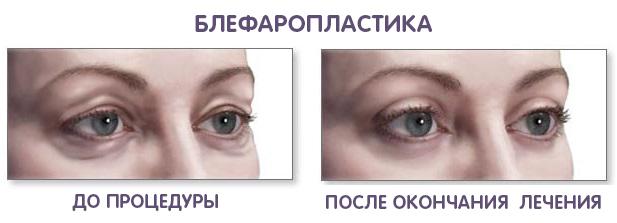
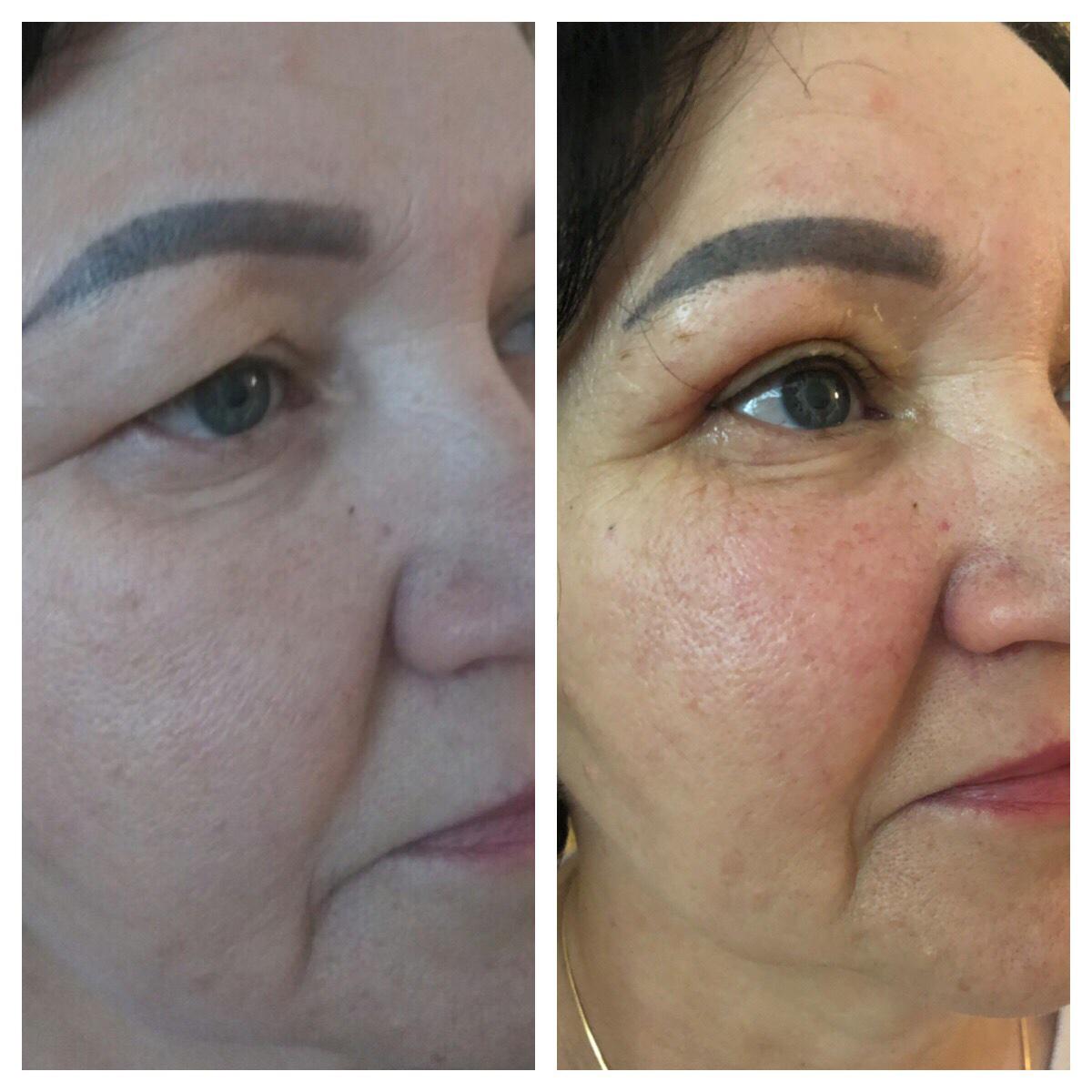
Blepharoplasty is a surgery aimed at improving the appearance of the eyelids and the periorbital area (around the eye) by removing excess skin, partial removal or redistribution of intra-orbital fat as well as lifting the orbicular muscle of the eye.
Eyelids and periorbital area are among the facial areas most affected by aging. The very tender skin of the eyelids shows age faster than any other. The changes affect not only the skin, but also deeper structures. The external signs include excessive skin in the upper eyelid area, which may hang over the eye and even reduce the vision field; in the lower eyelid area, the patient gets wrinkles and the so-called «eye-bags».
A surgery called blepharoplasty may improve the situation. Aesthetic blepharoplasty is one of the most popular aesthetic surgeries. There is no specific age for blepharoplasty. This surgery may be performed both in the young age as well as later in life. Most patients that undergo this surgery are over 35.