т
Sooner or later, every person that has some refractive errors of vision expresses a desire to see the world with their own eyes, without the help of glasses or contact lenses. Vision correction using an excimer laser is the most wide-spread modern microsurgical method of achieving optimal visual acuity.
The essence of laser vision correction зору
In the course of laser vision correction, the frontal part of the cornea is reshaped. The shape of the cornea is set by the computer and the surgeon performs this procedure using an excimer laser. All methods of laser correction are aimed at reshaping the front surface of the cornea, thus changing the refractive qualities of an eye’s optic system and the image starts focusing on the retina. The principle of the surgery lies in vaporising a thin layer of the cornea in order to reshape it. Laser vision correction is performed to treatmyopia(near-sightedness),hyperopia (farsightedness)of various degrees and astigmatism..
In order to perform laser vision correction, two methods – either LASIK or LASEK (aka PRK) – are used.
LASIK Method
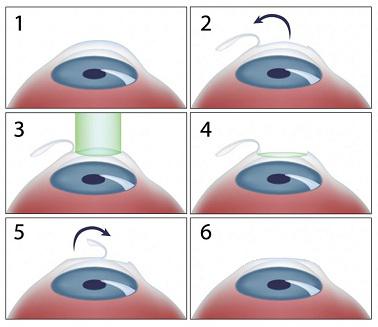
When performing LASIK, your surgeon, using a special automated tool called microkeratome, will first create a very thin superficial flap in your cornea.
The creation of this superficial flap allows to preserve the maximum thickness of the cornea, thus ensuring the maximum sustainable result of the laser correction. Moreover, a 120-micron thick flap facilitates the fastest and most comfortable recovery period. After the completion of the laser correction, the flap is laid back in place and it seals naturally to the underlying cornea. Within just a few hours after the procedure there are no visible traits of laser correction! Full healing and adaptation of the flap occurs within the first 24 hours!
LASEK Method
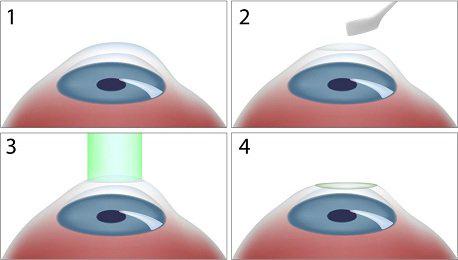 In some cases, laser correction is performed without creating a superficial flap. This type of laser correction is called LASEK (earlier was called PRK - photorefractive keratectomy). It is used for thinner corneas as well as for a specific – either too steep or too flat – cornea, when creation of a flap presents some technical difficulties. When performing a LASEK correction, the superficial cell layer (epithelium) of cornea is removed in the central area and then the laser correction is performed following the appropriate scenario. At the end of the procedure, a soft contact lens is put on the cornea, which remains there until full healing of the superficial epithelial layer. The process usually takes from 4 to 6 days. During this period, the patient may feel certain discomfort, light sensitivity. In order to reduce the severity of these symptoms, one should use rewetting eye drops and sunglasses.
No-Touch Vision Correction Using WaveLight StreamLight (new addition of 2019!)
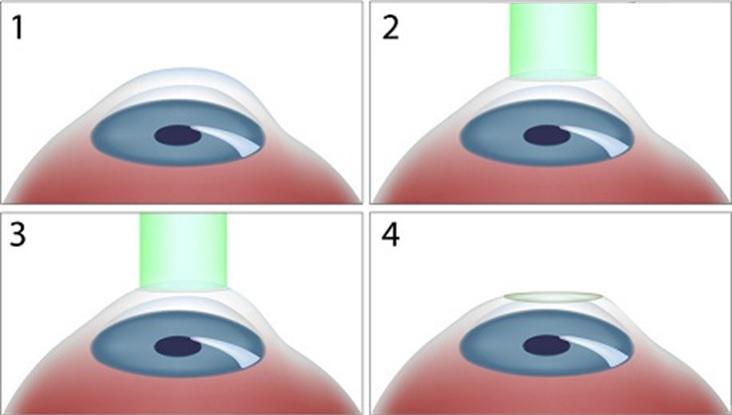
This type of correction allows us to perform a “one step no touch” procedure, using a fully automated equipment without touching the patient’s eye, i.e. without using any surgical tools or solutions. In the course of the procedure, the eye is touched twice: with an eyelid retractor before and a contact lens after the correction. It is a type of surface, no flap correction, that is why it also requires some time to recover, even though the recovery period is much shorter. The method suits patients with near-sightedness and near-sighted astigmatism and is ideal for those who are afraid of the correction itself. It is non-contact, very fast and fully excludes human factor.
Are You a Suitable Patient for Laser Correction?
You Are a Suitable Patient for Laser Correction if You are:
- Over 18.
- Have a stable vision for a year.
- Do not have any other ophthalmic diseases (old traumas, infections, chronic inflammation, acute stage of a retina disease.
- Advisability of laser correction is discussed when the patient has either diabetes or any of the systemic autoimmune diseases.
- Not pregnant, do not breastfeed. During pregnancy and breastfeeding the hormone levels of a woman change and because of that there may be unpredictable correction results. You can plan the correction a month after stopping breastfeeding.
Equipment
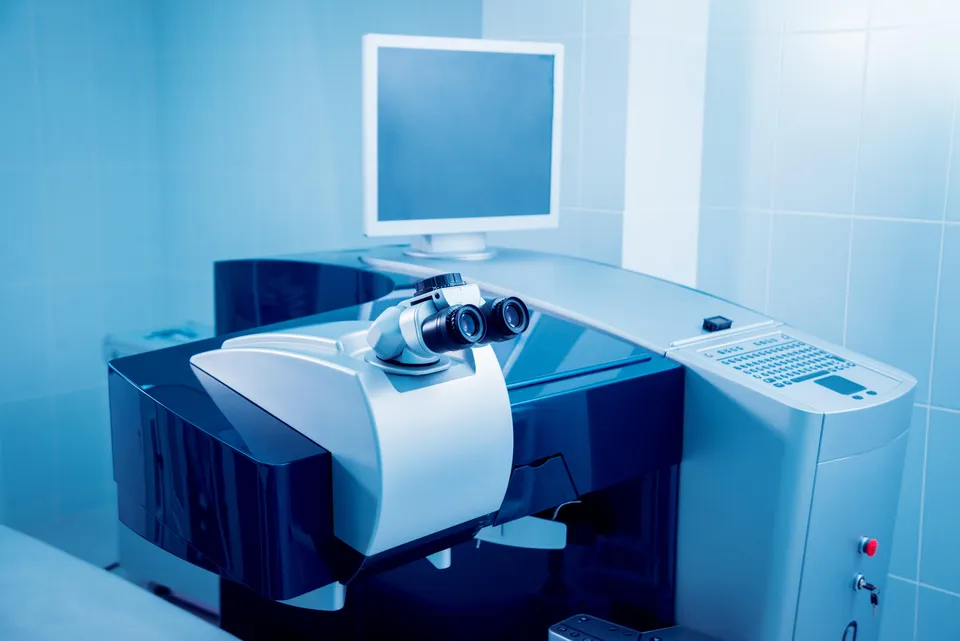
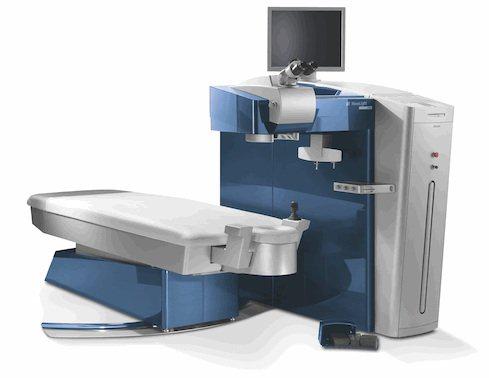
Laser correction at the Podillya Vision Centre is performed on the cutting-edge excimer laser WaveLight EX500 with the latest addition to it in September 2020. EX500 is the excimer laser developed specifically for performing personalized laser vision correction. High flexibility and precision of this laser make it possible to perform laser correction and achieve good results even in patients with a high refractive error. This is possible primarily due to the high speed of the laser system operation. WaveLight EX500 is the fastest of all currently existing excimer lasers in the world.
The WaveLight EX500 System includes following technological improvements:
- improved trajectory of the laser beam;
- calibration accuracy raised to the HD – high definition – level;
- a unique system of eye tracking, with the shortest possible system reaction time interval (1050 Hz) ensures the accuracy of correction, all the micro-movements of the eye are compensated by the shift of the laser beam
- a small dot combined with the algorithm tracing its movement within the operation area makes laser correction safer – minimal tissue removal, maximal cornea stability and refractive outcomes of the correction;
- the overall comfort level of the procedure has been improved:
- Laser frequency – 500 Hz – very fast correction – increased precision and comfort (the only high-speed laser to receive the FDA Certificate).
Ziemer Femto LDV Z8 NEO Multi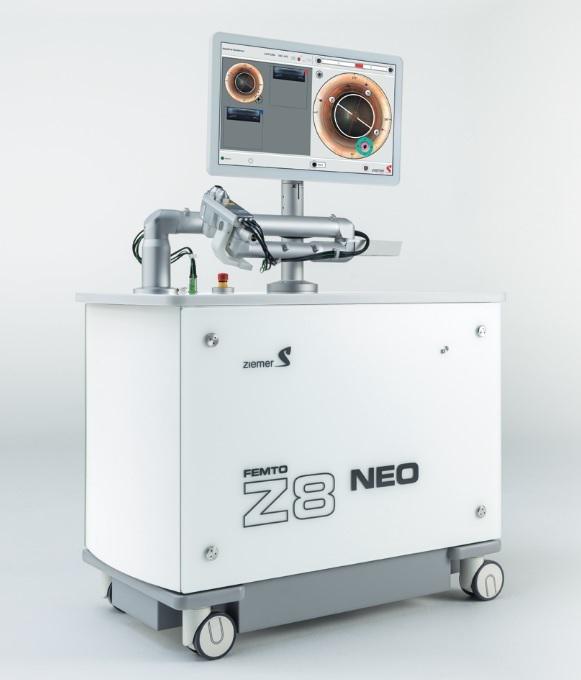
SMALL, SMART, SWISS
www.ziemergroup.comCorrection Protocols
Optimized correction (OptiLASIK, OptiLASEK) – is a standard aspheric program in which the correction is performed in accordance with normative cards, i.e. the optimum average is selected. The correction is performed in the 6.5mm zone, thus considerably reducing light dispersion at dusk and at night.
LASIK / LASEK Custom-Q protocol is a personalized aspheric correction. This aspheric program is suitable for those patient for whom vision quality at dusk and at night is especially important. The EX500 laser has a unique possibility to specifically shape the cornea in such a way that it will have an optimal level of spherical aberrations. All the peculiarities of the eye in general and cornea in particular are taken into consideration and using 54,000 measurement points, the personalized correction protocol is being designed. This considerably lowers and in some cases completely removes light dispersion (spherical aberrations).
Topography-Guided Protocol is a topographic correction using the data from Topolyzer Vario to correct non-standard values of corneal surface. The procedure is performed in cases of cicatricle changes, corneal traumas and as a second stage after the procedures of earlier formats (e.g. photorefractory keratectomies within a 3 mm zone that were performed 15 years ago).
Femto Swiss LASIK (all-laser-LASIK, bladeless LASIK)
How to Prepare Yourself to Laser Correction
Come for a consultation and examination which usually takes about 1 hour. The full examination of the eyes will be performed as well as a number of additional tests in order to particularize the optic parameters of the eye and select the correction protocol. It is important that you stop using contact lenses (soft lenses – 7 days; hard lenses – 2 weeks). This will ensure the most accurate measurement of the thickness and structure of the corneal surface. After the examination, the doctor will give his opinion and recommendations, and afterwards the day of the correction is appointed.
Not later than 14 days prior to the correction you have to take a general blood test, RW and Hbs-Ag analysis.
You have to be completely healthy on the correction day (no cold, cough or runny nose). Any cold related illnesses, especially those that have virus aetiology, lower the immune levels and may be a reason for slower regeneration processes in the cornea after the correction.
What Should You Expect on the Day of the Correction?
On the day of the correction, after all the necessary documents are filled in, the doctor will perform the final examination, together with you he will select the method and protocol of laser correction. After all the preparatory stages are over, you will be led into the operation room, where the correction will be performed. The procedure takes up to 15 minutes, is practically painless (local anaesthesia in the form of eye drops is used). During the procedure you will only feel the touch and see some shimmering lights, the doctor is talking to you and describing his every step. After the procedure is over, you have to remain under supervision for about an hour. After that, the primary follow-up examination is performed, you receive all the necessary recommendations and the date of your next visit is set.
How Should You Behave After Laser Correction:
- Photophobia and lacrimation are experienced during 3-4 hours after the LASIK procedure and may last for 1-2 days after LASEK.
- Do not touch your eyes with your hands for 24 hours after the procedure, dab a tear off the cheek using a clean handkerchief or tissue, having washed your hands beforehand.
- Use the eye-drops strictly following the doctor’s prescription (you should apply the drops carefully pulling down the lower eyelid).
- Do not use makeup for 2 weeks after the correction; the use of aerosols should be avoided for the first days after the procedure.
- For a month after the laser correction refrain from any activities with potentially high traumatic level (going to the gym, weight lifting, ice-skating, bike riding, agricultural works etc.); do not go to swimming pools or swim in the lakes, rivers or seas; refrain from going to the sauna.
- Use sunglasses when outside
- You should strictly follow all doctor’s recommendations, don’t miss the scheduled follow-up examinations.
- Planned follow-up examinations are performed 1, 3, and 6 months after the correction. These visits are included in the initial price and are not paid for additionally.