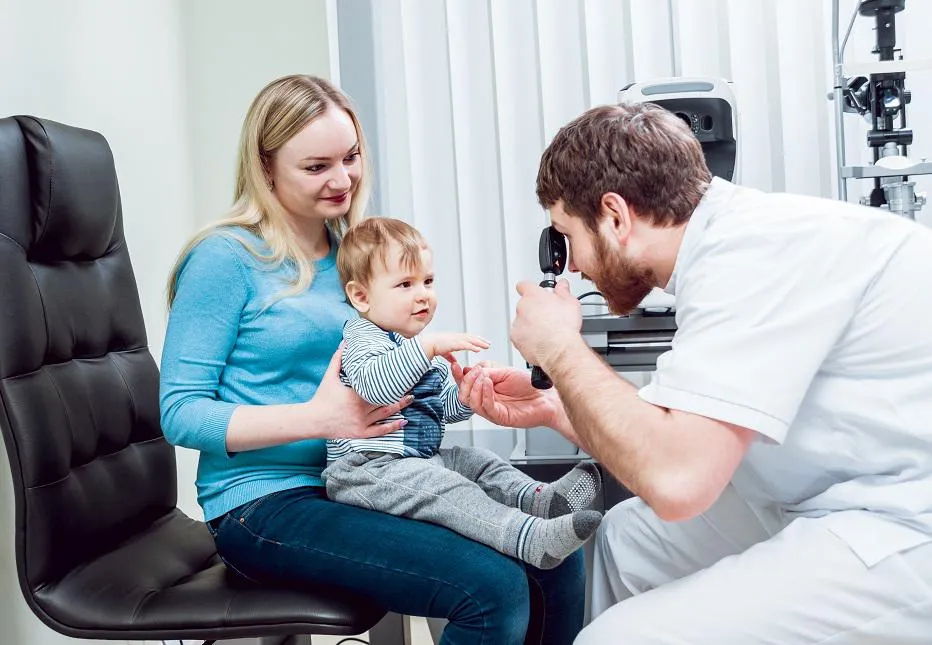
Near-sightedness, farsightedness, astigmatism, strabismus, amblyopia… many disorders begin in childhood. You can timely detect and stop the vision disorder only if a child has annual complex vision examination and thoroughly follows the doctor’s advice.
7 reasons why it is important to check your child’s vision regularly
- Only a complex examination using modern equipment designed for children examination, allows to detect the development of a vision disorder
- In order to eliminate congenital vision defects, the first eye examination must be performed during the first months of a child’s life.
- Vision disorders tend to be hereditary. Near-sightedness or farsightedness of one of the parents manifests a high risk of vision disorders in a child.
- The children strain their eyes not less than grown-ups. That is why most eye disorders appear at the age of 8-10 years, when the child already goes to school.
- Vision disorder may be one of the reasons why a child may not want to go to school, show lower academic performance, low speech development, memory, spatial orientation and school socialization.
- The vision system is formed by the age of 12. After this age, many eye disorders become irreversible.
- Low visual acuity may limit the choice of a future profession – in many professions wearing glasses or contact lenses is unacceptable.
The Podillya Vision Centre has a modern complex of diagnostic equipment which allows to assess the state of the vision system of a child and to select personalized treatment. The eyes are examined in a comfortable atmosphere, using “no touch” techniques and in the form of a game, in order not to make younger children tired.
What Is Included in the Children Complex Vision Examination?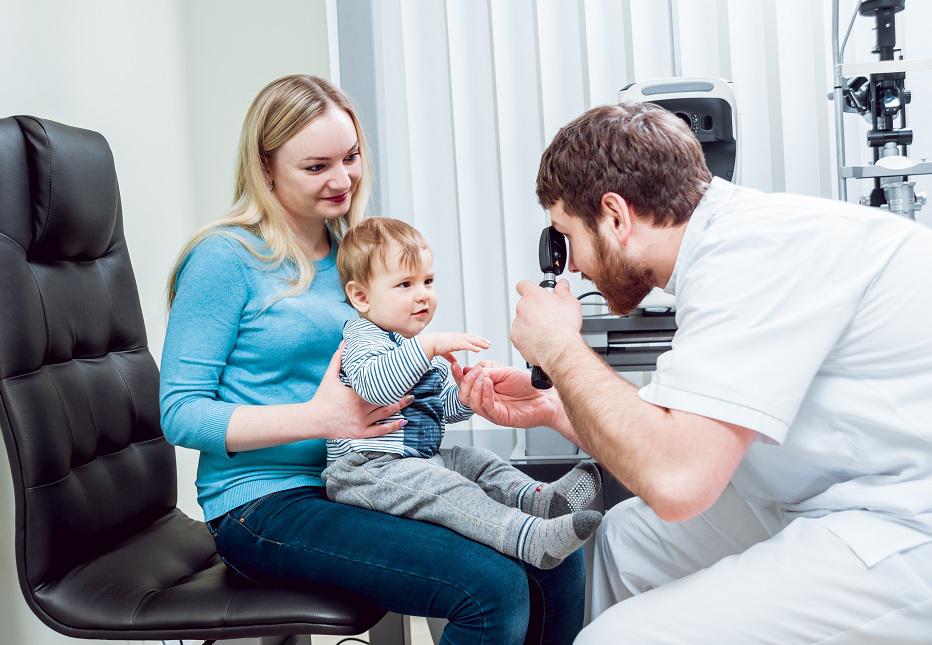
For Children under the Age of 3:
- Check-up of age reflexes
- Cycloplegia – examination with dilated pupils for objective refraction examination
- Ophthalmoscopy – examination of the fundus of the eye: retina, optic disc, other segments of the eye.
- Sciascopy – a shadow probe to determine the type of refraction: near-sightedness, farsightedness etc.
- Consultation of a paediatric ophthalmologist
For Children Aged 3 to 18:
- Checking visual acuity without and with the correction;
- Autorefractometry – measuring the optic force of the eye;
- Determining the strabismus angle using the “Synoptophore” machine
- Determining the type of vision (binocular, monocular, simultaneous)
- Second autorefractometry in conditions of cycloplegia
- Ophthalmoscopy
- Biomicroscopy – examination of the anterior part of the eye with the help of a slit lamp
- Examination of the anterior part of the eye and measuring the length of the anterior-posterior axe of the eye using the IOL Master (Carl Zeiss Meditec AG, Germany)
- Determining the colour perception using the Rabkin tables
- Consultation of a paediatric ophthalmologist
How to Prepare Yourself for the Examination?
-
Make an appointment in advance and set the time which is convenient for you and your child
-
It is better to come to the Clinic 10-15 minutes before the time of the appointment, to have time to take off your coat and fill in the registration card for your child.
-
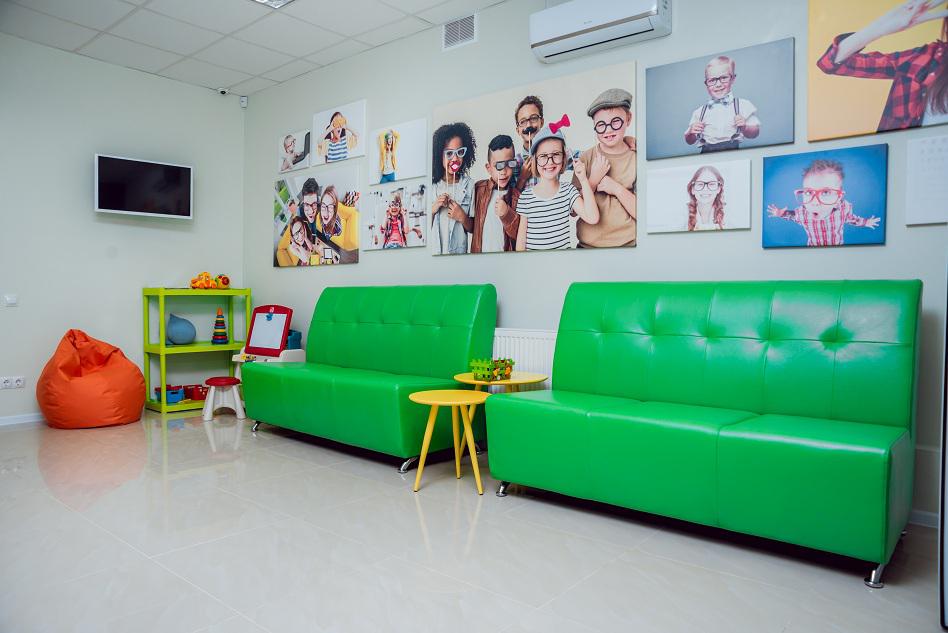
The examination itself will take about an hour. We have a kids’ corner with toys for our young patients, so that they do not feel bored.
-
The examination does not require any special preparation. ust explain to your child that he will be «photographed» by different machines and that he/she will be asked to name some pictures. Our ophthalmologists happily turn a serious examination into an exciting game!
-
In the course of the examination the child’s pupil will be dilated with the help of eye-drops; this is necessary to receive objective results in the course of examination. Be prepared that during the next 2-3 hours the kid will have difficulties with focusing on some objects and bright light may cause inconvenience. If the child wears sunglasses, take them with you.